Cracked Hot Tub Shell Repair by Local Experts
A shell crack is different from a plumbing leak, because the shell is the vessel itself. A crack in the acrylic lets water behind the shell and into the foam, where it waterlogs the insulation and rots the frame from the inside. If water is escaping but you cannot see a crack, the fault may be a hot tub leak repair problem in the plumbing instead. If you can see the crack, our guide on how to fix a crack in a hot tub walks through the epoxy repair step by step, and our technicians bond the cracks that need a professional finish.
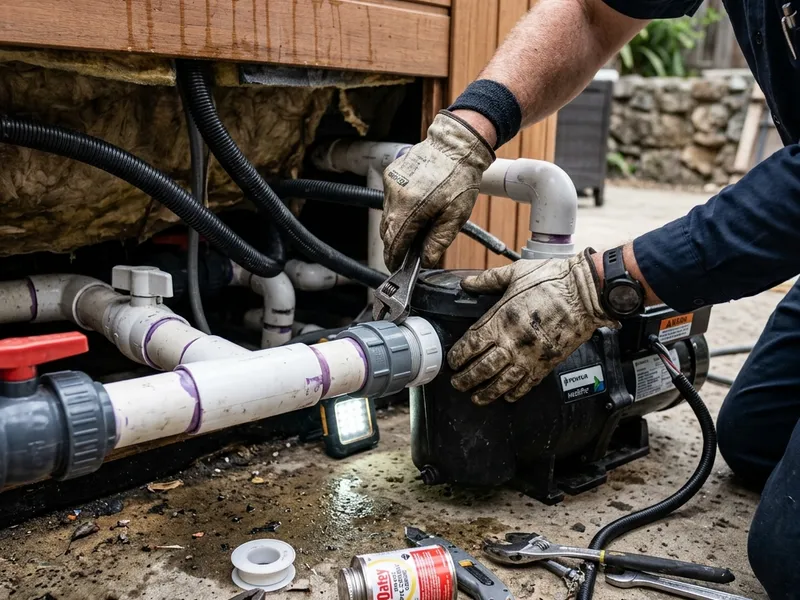
Understanding Spa Shell Delamination and Cracking
The acrylic or fiberglass shell of your hot tub is the primary barrier holding hundreds of gallons of water. Over time, constant exposure to direct UV sunlight, harsh chemical imbalances (like excessive chlorine or bromine), and extreme temperature fluctuations can cause the shell to degrade. This degradation often manifests as surface blistering, spider web cracking, or complete structural delamination.
Unlike minor plumbing leaks, a crack in the structural shell requires specialized hot tub shell repair techniques. If left unaddressed, water will seep behind the acrylic layer into the fiberglass backing and foam insulation, causing irreversible waterlogging and rot. Our network of specialized technicians utilizes marine-grade epoxies, Plast-Aid, and color-matched acrylic resins to permanently bond and seal these fractures.
The Repair Process for Acrylic Blisters and Fractures
Attempting a DIY hot tub repair kit on a structural crack often leads to disastrous results, as standard silicone or household epoxies cannot withstand the hydrostatic pressure and thermal expansion of a spa. Professional technicians follow a rigorous protocol: First, the damaged area is drained and thoroughly dried. The crack is then routed out to create a 'V' channel, which increases the surface area for the new bonding agent.
Next, a specialized methacrylate adhesive or fiberglass-reinforced putty is applied. Once cured, the area is meticulously sanded, buffed, and polished to match the original factory contour. While perfect color matching is challenging on older, faded tubs, the structural integrity is fully restored, saving you thousands of dollars compared to replacing the entire unit.
Brand-Specific Spa Acrylic Shell & Crack Repair
Hot tub internals are not one-size-fits-all. Our highly trained technicians have seen every possible failure point across all major OEM systems. We don't just guess; we use advanced diagnostic tools to pinpoint the exact electrical or mechanical fault requiring hot tub shell repair.
- Balboa Water Group SystemsBalboa systems (like the VS, BP, or GL series) are notorious for throwing "SnA", "SnB", or "FLO" codes when requiring hot tub shell repair. Our techs know exactly how to test Balboa M7 sensors for correct OHM resistance to determine if the sensor is dead or if there is a genuine flow restriction preventing operation.
- Gecko Alliance (in.ye / in.xm)Gecko systems often display "Hr", "HL", or "Prr" codes. Unlike Balboa, Gecko uses an integrated pressure switch or flow meter that requires different calibration during hot tub shell repair. We carry OEM Gecko replacements to prevent warranty voiding.
- Proprietary Systems (Watkins / Hot Spring / Jacuzzi)Flagship brands often use proprietary motherboards (like the IQ2020) and specialized circulation pumps (like the Laing E5). Spa Acrylic Shell & Crack Repair on these units requires deep technical knowledge of bypass loops and proprietary relay mapping, which our specialists possess.
How We Repair a Cracked Shell
A shell repair is a bonding job, not a parts swap.
Drain and dry the area: Drain the tub below the crack and dry the area completely. Epoxy will not bond to a damp shell.
Route a V channel and bond it: Route a shallow V channel along the crack so the bonding agent has surface to grip, then apply marine-grade epoxy or fiberglass-reinforced putty.
Cure, sand and polish: Let the repair cure fully, then sand, buff and polish it back to the factory contour. A perfect color match is hard on an older faded tub, but the shell is watertight and structurally sound again.
The Financial ROI: Repair vs. Replace
Many homeowners panic when faced with hot tub shell repair, assuming it makes more sense to throw the hot tub away and buy a new one. Salesmen at dealerships will often push this narrative, claiming "new tubs are more energy efficient." The math tells a different story.
A brand new, high-quality acrylic hot tub easily costs between $8,000 and $15,000. Furthermore, removing your old tub often incurs a $500 to $800 disposal fee. If a new tub saves you $20 a month in electricity, it would take you over 40 years to break even on that $10,000 purchase. In contrast, comprehensive Spa Acrylic Shell & Crack Repair usually costs only a tiny fraction of a replacement. As long as the acrylic shell holds water and the wooden frame isn't rotten, repairing the internal components is almost always the smartest financial decision.
Warning Signs You Need Spa Acrylic Shell & Crack Repair
- Unexpected drops in water temperature or inability to heat up to 104°F.
- Loud humming, grinding, or screeching noises coming from the equipment bay.
- Persistent error codes flashing on the topside control panel.
- Visible water pooling around the base of the cabinet or dropping water levels.
- Repeatedly tripping the GFCI breaker as soon as the spa is powered on.
- Weak jet pressure or jets blowing air intermittently.
Need Spa Acrylic Shell & Crack Repair?
Our local partners offer rapid, reliable service. Call now to speak with a dispatcher and get your spa running again.
(833) 435-3362