Why is My Hot Tub Tripping the Breaker?
There is nothing quite as frustrating as walking out to use your hot tub, flipping the GFCI (Ground Fault Circuit Interrupter) breaker to turn it on, and watching it instantly snap back to the "OFF" position.
A tripping breaker is not a nuisance; it is a critical safety mechanism doing exactly what it was designed to do: preventing you from being electrocuted.
If your hot tub is tripping the breaker, it means that electricity is escaping its intended path and finding a shortcut to the ground wire (a ground fault), or the hot tub is pulling more amperage than the breaker can handle (an overload). In a vessel filled with 400 gallons of highly conductive salt or chlorinated water, a ground fault is incredibly dangerous.
In this guide, we will explain the most common causes of a tripping hot tub breaker and how professional technicians systematically diagnose the problem.
1. The Heater Element (The #1 Culprit)
In 80% of cases where a hot tub instantly trips the breaker, the heater element is the culprit.
The heater element is essentially a large metal coil (similar to the heating element in an oven) that sits inside a stainless steel tube. As electricity passes through the coil, it gets hot, warming the water flowing past it. Over time, poor water chemistry—specifically low pH (acidic water) or high chlorine levels—will eat away at the protective outer coating of the element.
Once the coating is breached, water touches the electrified coil inside. The GFCI breaker immediately detects this current leakage into the water and trips to prevent the water from becoming electrified.
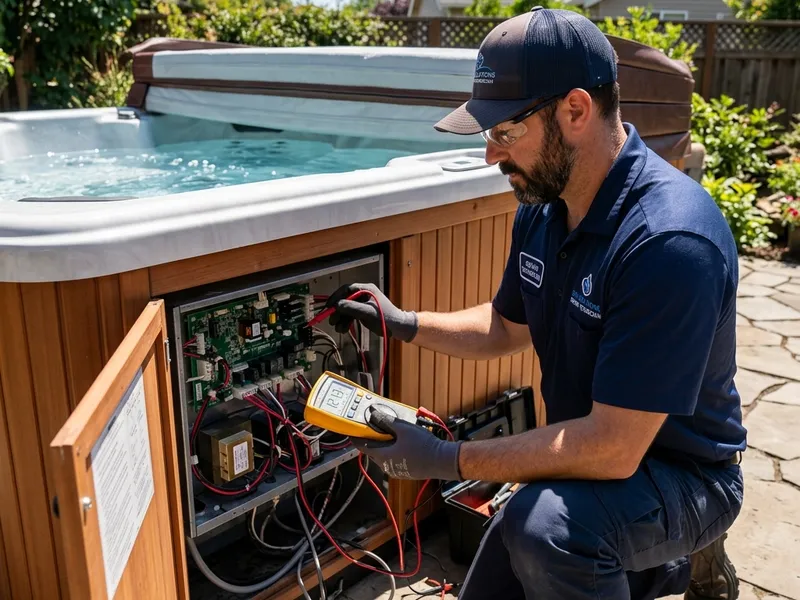
How technicians diagnose this: A technician will safely disconnect the two power leads going to the heater element from the control board. If they turn the breaker back on and the spa powers up perfectly without the heater connected, they have instantly isolated the heater as the source of the ground fault. The element (or the entire heater assembly) must be replaced.
2. The Ozonator (The Sneaky Culprit)
If you have isolated the heater and the breaker still trips, the next most likely culprit is the Ozonator.
An ozonator is a small device that generates ozone gas and injects it into the water to kill bacteria. Because it interacts with the plumbing, water can sometimes back up through the ozone airline (usually due to a failed check valve) and flood the electronic circuitry inside the ozonator box.
When the wet circuitry tries to power on, it causes a ground fault, tripping the breaker.
How technicians diagnose this: Just like the heater, the technician will unplug the ozonator from the control board. If the breaker holds, the ozonator is flooded and ruined. Most homeowners opt to simply leave the broken ozonator unplugged and manage their water chemistry manually with chlorine/bromine, rather than spending $200+ on a new one.
Need Professional Hot Tub Repair?
We have verified technicians available nationwide.
3. A Seized or Flooded Pump Motor
Hot tub pumps endure incredibly harsh conditions. If the mechanical seal on the pump's wet end fails, water will slowly drip out along the motor shaft. Eventually, this water will seep into the electrical motor windings, causing a massive short circuit.
Alternatively, if the motor bearings rust and seize completely, the motor will try to turn but can't. It will draw a massive amount of amperage in a desperate attempt to spin (known as Locked Rotor Amperage), which will instantly overload and trip the breaker.
How technicians diagnose this: If the breaker doesn't trip immediately when you turn on the power, but instead trips 5 seconds later exactly when you hear a pump try to engage, a pump is the culprit. The technician will unplug all pumps from the board and plug them back in one by one until the breaker trips, isolating the bad pump.
4. A Failed GFCI Breaker
It is possible that there is absolutely nothing wrong with your hot tub, and the breaker itself has gone bad.
GFCI breakers are highly sensitive and are exposed to the elements in an outdoor subpanel. Over time, moisture, insects, and power surges can degrade the internal mechanism of the breaker, causing it to trip randomly or refuse to stay on even when no load is applied.
How technicians diagnose this: A technician will completely disconnect the hot tub wiring from the load side of the GFCI breaker. If the breaker still trips when turned on with nothing attached to it, the breaker itself is faulty and must be replaced by a licensed electrician.
5. Moisture in the Control Box
During severe rainstorms or blizzards, moisture can sometimes find its way inside the main spa control box. Even a few drops of condensation across the wrong terminals on the motherboard can create a microscopic short circuit that a sensitive GFCI breaker will detect.
How technicians diagnose this: The technician will inspect the motherboard for visible signs of water, corrosion, or insect nests (spiders and ants love the warmth of a control box and frequently cause shorts). If moisture is found, they will dry the board thoroughly with a heat gun. If the short was temporary, the board might survive. If the moisture caused a high-voltage arc, the board is likely destroyed and must be replaced.
Why You Shouldn't DIY Electrical Diagnostics
We cannot stress this enough: Do not attempt to diagnose a tripping breaker yourself.
When a hot tub is tripping a breaker, you are dealing with a live ground fault on a 240-volt circuit. The internet is full of terrible advice suggesting homeowners should "disconnect the heater while the power is on" or "bypass the GFCI to see if the tub runs."
These actions are incredibly dangerous. Bypassing a GFCI on a hot tub removes the only safety mechanism standing between you and lethal electrocution if you touch the water.
Conclusion
A tripping hot tub breaker is a symptom of a serious electrical fault. The process of elimination to find the fault—unplugging heaters, pumps, blowers, and ozonators—must be done with the main power completely disconnected, using proper multimeters to test for continuity to ground.
If your hot tub will not stay on, leave the breaker in the OFF position and call a licensed, insured hot tub repair specialist. They have the training and tools to isolate the ground fault safely and replace the damaged component, ensuring your hot tub is safe to enjoy once again.