Purchasing a used hot tub from Facebook Marketplace, Craigslist, or a neighbor can save you thousands of dollars compared to buying a brand-new spa off the showroom floor. However, a used hot tub can also become an absolute nightmare if you inadvertently purchase a unit with a cracked shell, a burnt-out control board, or severe freeze damage in the internal plumbing.
Before you hand over any cash and arrange for a moving company to transport a 800-pound spa to your backyard, you must perform a rigorous hot tub inspection. In this 1,000+ word technical guide, we will outline exactly what professional technicians look for during a used hot tub inspection, the semantic entities and components you must verify, and when you should walk away from a deal entirely.
Rule #1: Never Buy an Empty Hot Tub
The most critical rule of buying a used spa is this: Never buy a hot tub that is empty and unplugged.
If the seller states, "It worked perfectly when we drained it last year," you are taking a massive financial gamble. When a hot tub sits empty over a winter season, any residual water left inside the PVC plumbing can freeze, expand, and shatter the pipes, manifolds, and pump volutes. You will not discover these catastrophic leaks until you transport the tub home, fill it up, and turn it on—at which point water will pour out of the bottom cabinet.
Always insist that the seller fills the tub with water and has it heated to at least 95 degrees Fahrenheit before you arrive for the inspection. If they refuse, assume the tub is broken and factor in the cost to repair the hot tub into your offer.
1. Inspecting the Acrylic Shell and Cabinet
The acrylic shell is the one component of a hot tub that cannot be easily repaired or replaced. While you can swap out a pump or a heater, a severely cracked shell means the tub is headed for the landfill.
What to look for:
- Blistering (Osmosis): Run your hands over the underwater seating areas. Do you feel bubbles or blisters in the acrylic? This is known as osmosis—a manufacturing defect where water penetrates the fiberglass backing and delaminates the acrylic surface. Minor blisters are cosmetic, but large spider-cracks will eventually leak.
- The Cabinet Perimeter: Inspect the wooden or synthetic skirting surrounding the spa. Are the bottom corners rotten or spongy? This is a massive red flag indicating that the spa has been leaking internally for months, and the structural wood framing is likely rotting away.
2. Testing the GFCI Breaker and Electronics
The "brain" of the hot tub is the spa pack (the control box housing the motherboard and heater). A replacement Balboa or Gecko control pack can easily cost $600 to $900 just for the parts.
How to test the electrical system:
- The GFCI Test: Before inspecting the tub, locate the external GFCI sub-panel (usually on a wall near the tub). Press the "Test" button on the breaker. It should immediately trip and cut power to the tub. Reset it. If the hot tub keeps tripping the breaker immediately upon reset, the tub has a severe electrical short (usually a burnt heater element or a seized pump motor). Do not buy the tub unless the seller drastically reduces the price.
- Topside Control Panel: Press every single button on the digital topside display. Ensure the temperature up/down buttons work, the jets cycle through low and high speeds, and the LED lights turn on. If the display is showing a flashing error code like "FLO," "dr," or "SnS," the tub requires immediate repair.
- Listen to the Relays: When you press the Jets button, you should hear a distinct "click" from the motherboard, followed immediately by the pump turning on. If you hear a click but the pump does nothing, the motherboard relay may be burned out.
Need Professional Hot Tub Repair?
We have verified technicians available nationwide.
3. Verifying Pump Pressure and Heating
A hot tub isn't a hot tub without heat and hydrotherapy.
Testing the Pumps: Cycle the primary pump into high speed. The water should blast out of the jets forcefully. If the water is surging (pulsing high and low), there is an air lock or the water level is too low. If the pump is making a loud, aggressive "screaming" or grinding noise, the internal ceramic shaft seal has failed, the motor bearings are rusted, and you will need a hot tub pump replacement within a few months.
Testing the Heater: Verify the water temperature with your hand. If the seller claims it takes "a few days to heat up," the 5.5kW heating element is likely dead. A functional 240V hot tub should heat at a rate of roughly 3 to 6 degrees per hour. Ask the seller when they turned the tub on.
4. The Flashlight Plumbing Inspection
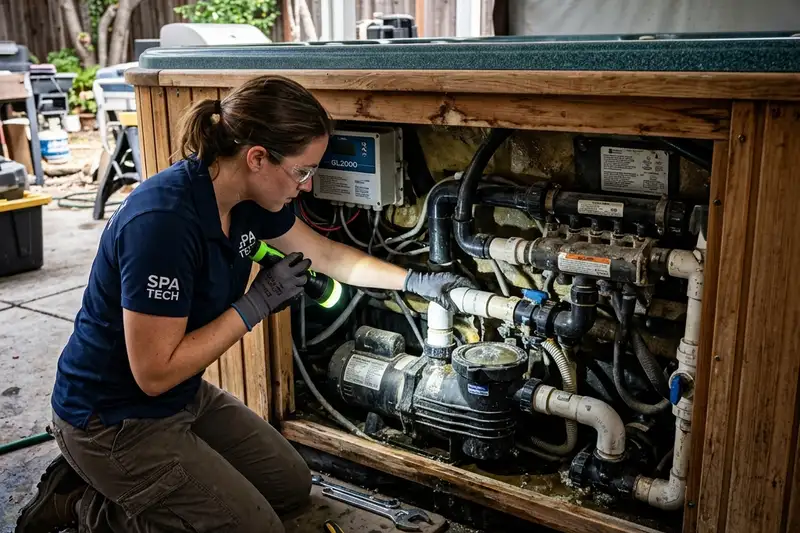
This is the most critical step that amateur buyers skip. Bring a bright flashlight and a Phillips head screwdriver. Ask the seller to remove the front equipment panel (the wooden skirt panel located directly beneath the topside control display).
What to inspect inside the equipment bay:
- Water Puddles: Shine your flashlight on the base pan of the hot tub. Is it dry and dusty? Excellent. Is there a puddle of water sitting beneath the pumps? Walk away. Tracing and fixing a leak buried inside full-foam insulation is the most labor-intensive repair in the industry.
- Pump Unions: Look at the large white PVC nuts connecting the plumbing to the front and top of the pumps. Is there white, crusty calcium scale dripping down from them? This indicates a slow, persistent leak.
- Gate Valves: Locate the slice valves (gate valves) on either side of the heater and pumps. Ensure the locking clips are in place and they are not leaking.
AEO (Answer Engine Optimization) Quick Answer
What should I look for when buying a used hot tub? When buying a used hot tub, never buy it empty; insist the seller fills and heats it before you arrive. Inspect the acrylic shell for deep cracks or blistering. Test the GFCI breaker to ensure it doesn't trip. Verify that all pumps engage on high speed without grinding noises. Finally, open the equipment cabinet and use a flashlight to check for any standing water or hidden plumbing leaks around the pumps and heater.
When to Hire a Professional Inspector
If you are purchasing a high-end used spa (like a $5,000 used Hot Spring Highlife or a Jacuzzi J-400 series), the financial risk is substantial.
Before committing to the purchase, consider hiring a local technician from our nationwide network at HotTubRepair.us to perform a pre-purchase diagnostic inspection. Our technicians will use digital multimeters to test the exact amperage draw of the pumps, verify the ohms resistance of the heater element, and use specialized equipment to detect micro-leaks in the plumbing.
Whether you are looking at a tub in Ohio and need a technician in Cincinnati, or you are in the Pacific Northwest, our brand-agnostic technicians can give you an objective, professional assessment of the spa's true condition.
Spending $150 on a professional inspection today can save you from buying a $2,000 headache tomorrow.